
Removable Dentures
What are dentures?
Dentures are removable artificial teeth worn to replace missing teeth. Dentures are usually made of acrylic (plastic) or a combination of acrylic and metal. Newer materials such as Valplast is used for flexible plastic dentures without metal clasps and hooks.
It is interesting to note that conventional removable dentures are becoming less popular due to the easy availability and strength of dental implants to replace missing teeth.
Are there different types of dentures?
There are three types of dentures:
- Partial Dentures – used to replace one or more missing teeth
- Complete Dentures – used to replace all the upper and/or lower teeth
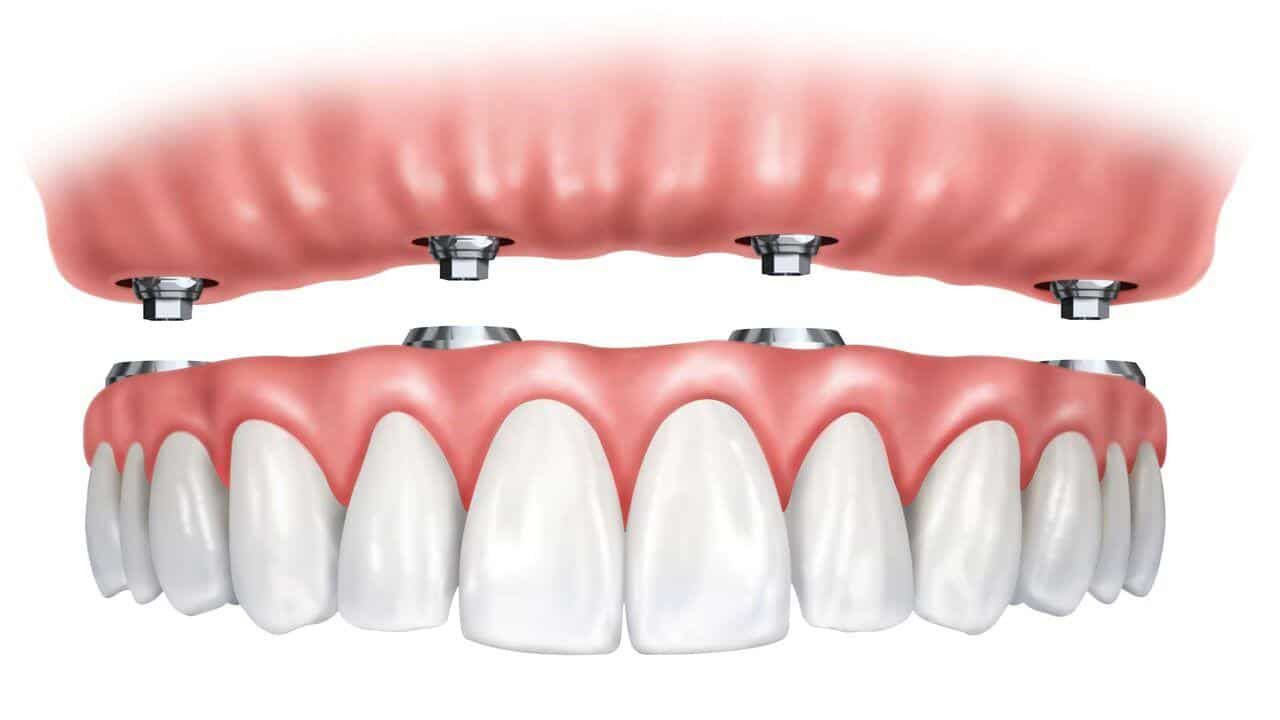
- Implant-supported Complete Dentures – a more stable and retentive version of conventional full dentures. Implants can help to stabilize lower complete dentures that tend to be loose.
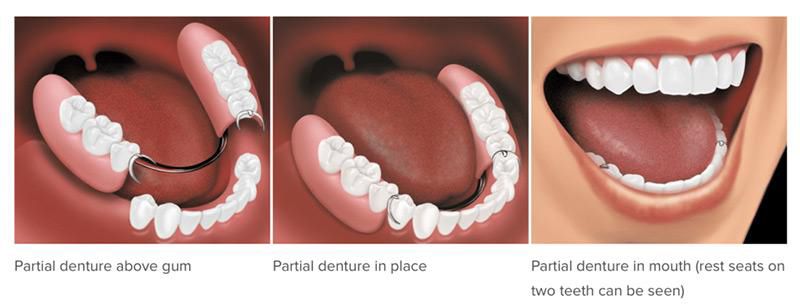
Partial Dentures
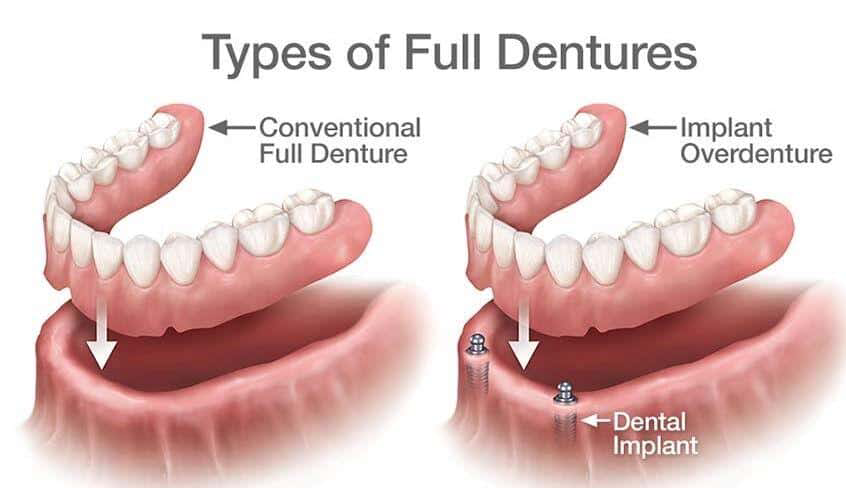
Full Dentures and Implant Supported dentures
The denture rests on the gum and against any remaining teeth adjacent to the space. The remaining teeth may be engaged with clasps and hooks for further retention.
Plastic (acrylic) dentures tend to be bulkier and more fragile than metal (cobalt chromium) base dentures. Metal-based dentures allow for sleeker designs and are more hygienic. Both partial and complete dentures can have plastic or metal bases.
Dentures at Elite Dental Group
Visit 1: Consultation and treatment planning
Your denture treatment goals and options for tooth replacement will be discussed. This is important so that you can have a reasonable idea of what to expect with the final prosthesis.
Examination of your mouth and current dentures can identify the source of current and future problems with your new denture(s). Very old dentures may have significant gaps on the fitting surface and this causes irritation and overgrowth of the soft tissues. Corrective and preventive measures will be discussed at this stage.
Some patients may require fillings or crowns in conjunction with the design and fabrication of their new dentures.
Photos and preliminary moulds of your mouth, teeth and current dentures will be made and we will discuss with you on the type and design of denture that would be best suited for you.
Visit 2: Master moulds and bite records
A 2nd set of more accurate moulds is made based on the preliminary moulds. Your bite relationship is then recorded. For some cases, a facebow record may also be taken.
The colour of the future denture teeth is also selected at this stage.
Visit 3: First Try in
The trial (wax) dentures are checked for fit, stability and integration with the rest of your mouth.
The colour of the denture teeth is checked to see how well these blend in. At this stage, if the colour needs tweaking, the denture is returned to the lab.
Your dentist may also adjust the tooth positions to achieve a certain look.
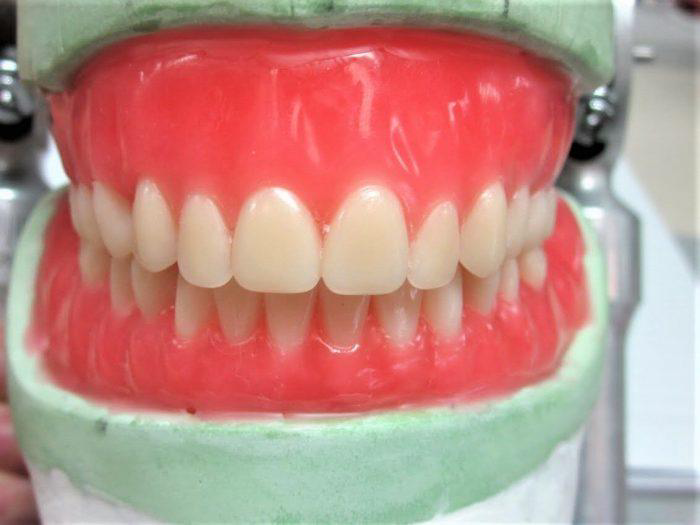
Visit 4: Second Try in
If your trial dentures had to undergo extensive adjustments (for eg: tooth position, tooth colour) one more trial visit is scheduled to ensure that the final dentures are satisfactory. Adjustments can easily be made and should be done at the trial denture stage.
Visit 5: Fitting your new dentures
First, the fitting surface that will rest on your gum and against your teeth is checked for pressure spots. These spots are trimmed to prevent excessive friction that may cause ulceration.
Once the denture is seated with uniform pressure, your new bite will then be checked and refined so that there will be even biting pressure on both sides and on your natural teeth.
We will then advise you on the best way to maintain your new dentures.
As you continue to wear your dentures, constant pressure on the gums will cause resorption and shrinkage of the underlying bone and gums. Over time, this will make your dentures loose and ill-fitting. Your dentures need periodic relines and adjustments to ensure proper fit. Eventually, the dentures will need to be remade.
Frequently
Asked
Questions
Got questions? We’ve got answers! Check out our FAQ section for common inquiries and helpful information to guide you.
What are removable dentures?
Removable dentures are prosthetic devices designed to replace missing teeth and surrounding tissues that can be taken out and put back into the mouth. They help restore oral function and aesthetics for individuals who have lost some or all of their natural teeth. The main types include complete dentures for patients who have lost all teeth in one or both arches and removable partial dentures for patients who still have some natural teeth remaining.
Removable dentures help restore an individual’s sense of normality and ability to interact normally, with tremendous social implications for daily life. They are intended for the rehabilitation of harmonious oral function and aesthetics on a long-term basis.
Who needs removable dentures?
Dental implants remain the most ideal option for replacing missing teeth due to their superior long-term survival, ability to preserve jawbone, and high patient satisfaction. For patients who are not eligible or suitable for implants, removable dentures provide an effective alternative to restore oral function, aesthetics, and quality of life.
Complete dentures are typically recommended for individuals who have lost multiple or all teeth, or when remaining oral tissues are in poor condition. Removable partial dentures may be appropriate for those seeking a simple and cost-effective solution, particularly when posterior teeth are missing and sound abutment teeth are present. While dentures are a practical alternative, implants remain the preferred option whenever feasible, as they offer the most durable and functionally reliable outcomes.
What are the benefits of removable dentures?
Removable dentures offer several advantages, including being non-invasive, cost-effective, and able to restore oral function and aesthetics. They help patients perform essential tasks such as eating, speaking, and socializing, and can significantly improve oral health-related quality of life—typically within 3 months of use, with benefits maintained for up to 12 months. Dentures help restore the vertical dimension of occlusion, increase occlusal contact area, and improve masticatory efficiency. They are also removable for cleaning, which facilitates oral hygiene maintenance.
However, removable dentures have some limitations. They often reduce bite force and overall masticatory efficiency, which may impose dietary restrictions. Retention and stability can be problematic, particularly for mandibular dentures, and they may increase the risk of denture-induced oral lesions or traumatic ulcers, which can cause pain and discomfort. Despite these drawbacks, removable dentures remain a practical option for patients who are not suitable candidates for dental implants, though implants are still the preferred solution whenever feasible due to their superior durability, function, and long-term outcomes.
How long do removable dentures last?
Complete dentures typically have an average longevity of around 10 years, with upper (maxillary) dentures generally lasting slightly longer than lower (mandibular) dentures. Removable partial dentures tend to have a shorter lifespan, with metal-based designs generally lasting longer than acrylic ones. Failure rates increase over time, but the actual lifespan of any denture can vary widely depending on individual circumstances.
Several factors can influence how long dentures last, including the frequency and quality of maintenance care such as regular relines, adjustments, check-ups, timing of relines, the patient’s oral hygiene and denture cleaning practices. Proper care and regular follow-up can help prolong the functional life of both complete and partial dentures, while neglect or poor hygiene may reduce their longevity.
HOW CAN WE
HELP?
Heading to a dental clinic can be a scary and almost overwhelming experience. If you have landed on our website, we would like to extend our warmest welcome to you and your family. There is nothing to fear!
If you require more information about our costs or are looking for ways to save money on dental treatments, arrange for a consultation with our dentists at a time of your convenience.
 Elite Dental Group